BLOG POST
Are Transients the Real Argument for Vinyl?
Are Transients the Real Case for Vinyl?
Not Just a Collector’s item.
This may annoy you. It’s either well-trodden ground or simply tone-deaf; after all, does a case for vinyl need to be made when it’s currently the highest-grossing format on the market?
But this is not a case for vinyl as physical media, which is burdened with tropes about tactility, collectability, and offline sentiment. As great as those things are, this is a case for vinyl’s superiority with respect to its transients, and that is probably what will annoy vinyl critics the most.
So, apologies for what is to ensue as I hitch up my waders and get into the longest-running debate in audiophile history: analogue vs digital.
Coming to Terms
If you’ve described vinyl’s appeal as “warmth,” you may have fallen into a common trap. Media often uses “warmth” as a catch-all explanation for vinyl’s resurgence. It hints at a difference between analogue and digital without explaining what that difference really is.
That’s understandable. Most people rarely experience a decent vinyl system, let alone compare it directly to digital.
Can we expect casual observers of the vinyl revival to dig deeper? “Warmth” is valid, but it’s only the surface. In my view, it’s not even the most important or convincing factor, since it’s often poo-pooed by vinyl critics as distortion.
Despite booming sales, many buyers still need convincing to actually play the records they purchase. If we want analogue to thrive long-term, we need to explain vinyl’s benefits more clearly and precisely. So let’s talk about the crucial term here: Transients.
Transients
This case is about transients. There are many other aspects of sound to be claimed by the digital or vinyl camps. But when it comes to transients, I am firmly planting the flag in the analogue territories.
To qualify, this isn’t about whether you can digitally model an analogue signal and its transients. You can. But perfect computer modelling and real-world playback are different things. So Shannon and Nyquist be damned, this is an argument that analogue creates an audio signal more efficiently, with less corruption, resulting in audible differences in transients.
For those new to the game, a transient is a short-duration, high-amplitude burst of energy occurring at the very beginning of a sound waveform. It represents the initial “impact” or attack—such as a drum hit, guitar pick, or vocal consonant—before the sound settles into its sustained phase. Transients are crucial for perceived punch, definition, and rhythm, but a lot more on that to come..
When Vinyl Sounds Better.
Walking around Hi-Fi shows, visiting dealerships, and in my own system (and friends’), one difference always stands out between analogue and digital: analogue’s superior soundstaging.
Soundstaging is how the various elements of the music present themselves in a 3-dimensional space. We use the terms ‘sound stage’, ‘stereo image’, or ‘imaging’ to refer to the sonic presentation of height, width, and depth, and the position of sounds in that space.
Vinyl systems deliver a greater sense of 3-dimensionality, especially in the depth of different elements of the sound, while digital presentations are closer to a 2-dimensional left-to-right pan. This stems from how transients are handled.
Digital lovers, why trust me, a chip in the game vinyl evangelist? Hear the argument from your own side:
In a 2024 Munich High End interview with John Darko, Chord Electronics digital consultant Rob Watts said of his M Scaler products:
“The big problem with digital is the timing of transients”
Now, to begin to understand what Watts is saying here, we first need to understand exactly what transients are.
What are Transients?
Transients refer to the initial rise and peak of a sound wave. This is the sound of the strike of a cymbal before the note sustains and decays. These are the consonants or emphasised vowels in the words of a vocal.
These are even the enunciated parts of a word that make it make sense. “I’ve got you under my skin” without its transients would sound something like: “i’e oh oo uner ay ih”. The sound no longer makes sense; everything is slurred and can’t convey the line’s meaning.
In the same sense, a drum snare would no longer sound like a snare, or a guitar like a guitar, maybe uncanny psychedelic ones at best. And uncanny is a good term here, because without the transients, the phrase is unable to sound natural or real.
All music has transients, so even Aphex Twin’s otherworldly ambient techno masterpiece ‘Selected Ambient Works 85-92’ would lose its airiness, its sense of beat, texture, and space without some level of transients during playback.
In a stereo mix, several instruments and or vocals are combined, each delivering their own transients that rise and peak in the music. But transient’s dont just control attack, and don’t just make things sound accurate, they also control the space and time of the soundstage. Watts explains this well:
“Transients are used by the brain so that we can perceive instruments as separate entities, locating those instruments in space, the timbre and pitch.”
So transients control our understanding and recognition of different words, and notes delivered by voices and instruments. As part of a waveform travelling at different speeds and amplitudes, they also control how we perceive space in the music, as well as any sense of timing, and the dynamic range.
How This Relates to Hi-Fi
The speed, efficiency, and control with which the playback system creates and delivers transients determine how you experience the dimensionality of your music.
Personally, I’m more engaged when things sound more three-dimensional, “In the room” and expansive in all directions.
The Problem with Digtial Transients
Watts assesses digital audio with refreshing, if not brutal, honesty:
“The big problem with the current digital is the timing of transients, and when you put the digital signal into an interpolation filter, and every single DAC on the planet has got an interpolation filter, the timing of transients is all wrong. They’re shifting backwards and forwards continuously, and this shifting backwards and forwards of the timing of transients confuses the brain, and as a result, your instruments lack separation, you don’t get timbre variation, and you can’t locate instruments in space’
Watt’s is revealing all of this of course, because the Quintet M Scaler is his, and Chord Electronics solution to this problem. But taking that aside, one of the keys to the argument for vinyl was in his next answer in the Darko interview. John asks Rob: Why is the Quintet able to do this and not the Dave? (the model below) Watts replies that the reason the Quintet can deliver improved transients is:
“Simply because of the amount of processing power. The more processing power you’ve got delivers much better sound quality because you can more accurately reconstruct the timing of transients. If you wanted to perfectly reconstruct the original timing, you would need an infinite amount of processing.”
Watts goes on to say that the algorithm used to reconstruct perfect transients is more important even than the infinite processing power required. The total development time for the proprietary coding in the Quartet took 6 years of development.
With digital, better transients are beginning to be delivered by using large amounts of power to process the digital source through an extremely complicated algorithm to enhance the digital signal. Watts’ endeavour is remarkable, innovative, and to be applauded.
The Case for Vinyl
Vinyl contrasts sharply: no conversion needed. No DAC, no interpolation filter, no timing corruption from digital processing.
Digital requires huge amounts of electricity for that processing. Here’s something we can all agree on: Mains power is noisy, so designers obsess over power supplies to reduce interference that blurs transients. It only takes a bit of time spent with an oscilloscope to see the evidence for yourself. Even batteries carry inherent noise.
Vinyl’s signal? Mechanically generated at full resolution. No electrical power required to create it
Digital playback takes electricity; vinyl playback makes electricity.
Your Cartridge Generates Brand New Electricity.
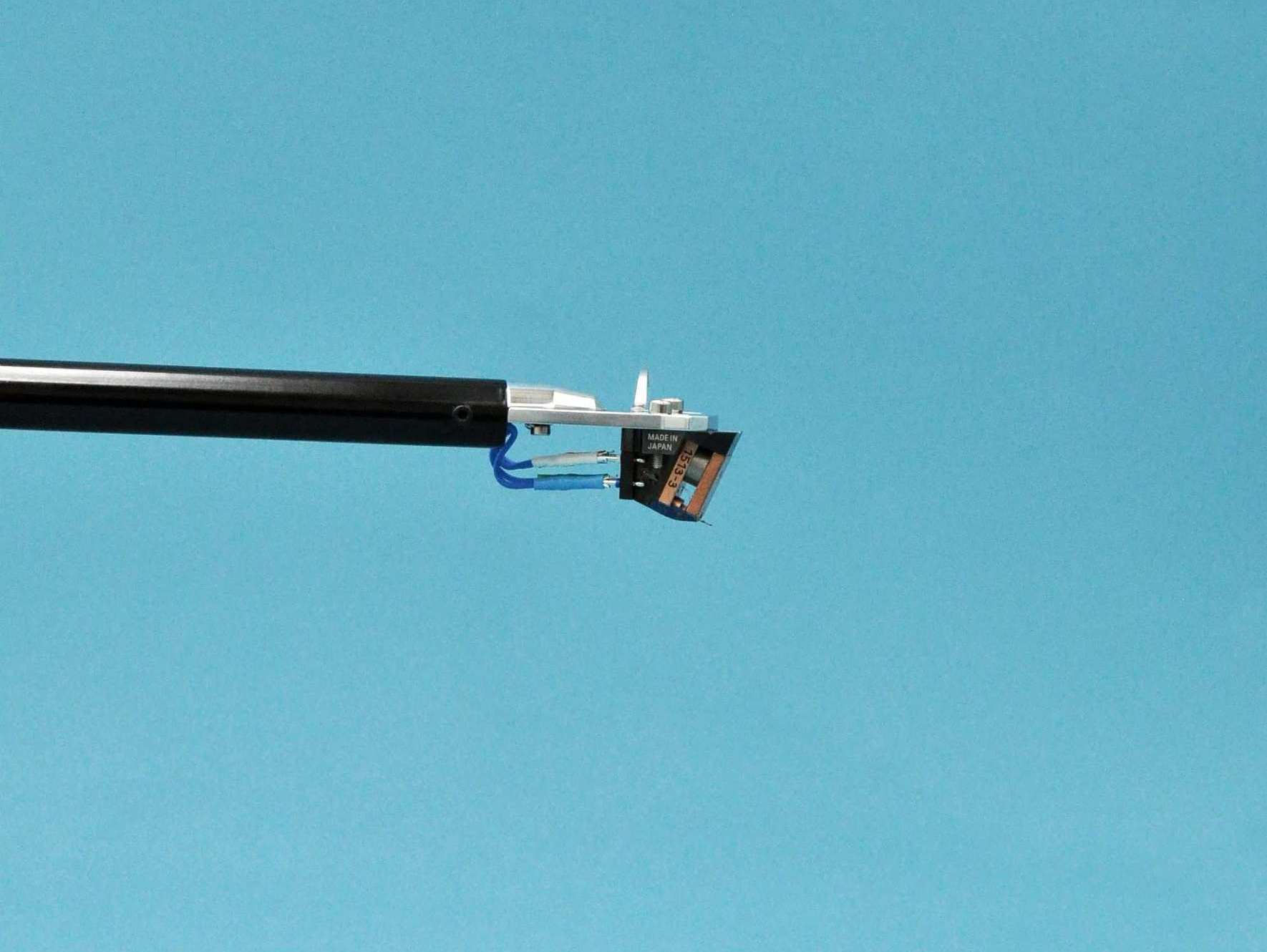
The cantilever attached to your stylus moves a magnet in coils (MM) or coils in magnets (MC), inducing current via electromagnetic induction. The cartridge is a tiny generator creating fresh electrical signal—left and right channels—without any prior power input.
Only after the tonearm wires does the signal hit its first electrical stage: the phono stage’s RIAA EQ, done with simple analogue electronics. No digital-to-analogue conversion, no upsampling, no special transient processing.
The cartridge is a transducer: mechanical energy → electrical energy. The tonearm has no power supply, no mains dependence. It delivers a raw analogue waveform.
Vinyl needs negligible power for EQ in the phono stage—but nothing to “enhance” or correct transients. Good analogue playback lets transients flow untampered from the source.
Interference with the source in vinyl systems is mostly mechanical (hence the need for premium gear), not electrical mains noise.
This is why good analogue playback is able to deliver such effective transients. In contrast to the slightly confused transients that Watts describes as endemic to basically all DACs on the market, the analogue signal delivers transients untampered straight from the source material. There is essentially no electrical interference of the kind faced by the rest of the mains taking system.
Sound of the police
I’m sure the measurements police will be after me for this one, with some kind of number that points to digital superiority. What’s more, I have no measurable data to provide you with. I can only point to the facts regarding electricity, and talk about the subjective experience I have after decades of being raised in the industry, of experiences in our listening room comparing CD to vinyl, streaming to Vinyl, and high-res to Vinyl.
I hear the same thing at every Hi-Fi Show I go to yearly in my job role, and every dealership I’ve visited who have been willing to make the comparison. For the digital crowd, this is unlikely to be enough. You’ll likely think I have probably developed some kind of Stockholm Syndrome, having been indoctrinated into vinyl from birth.
I’ll point out again that Rob Watts himself is the one pointing to a weakness in digital. Weakness in contrast to what? In contrast to an analogue signal. Without an analogue signal, we probably wouldn’t even know that depth could be such a sublime part of stereo playback, or just how good separation and soundstaging can get. And it’s not just Watts either. There are many developers in the industry who unexpectedly favour analogue, but wouldn’t make such comments on the record.
Rob Watts makes the case that more attention needs to be directed to the handling of the waveform itself for advancements in digital, rather than resting on the laurels of measurable figures (that may be quite irrelevant to an analogue signal). We listen to sound waves, not numbers. Every employed speaker designer will tell you that numbers always supplement listening. Be brave enough to listen with your ears and consider what a real musician, band, or orchestra in 3-dimensional space would sound like. If you need a reference point, heck, maybe get out of the listening room and attend a concert.
Not all vinyl beats digital. A Crosley is enough to dispel that idea. And this isn’t the case to say only listen to vinyl. There’s fantastic music only available digitally, and there’s fantastic music only on vinyl. Some of my favourite music is poorly mastered and pressed to vinyl. Some of the music I discover listening digitally sounds far better on vinyl.
Nor is it the case that even all high-end vinyl playback sounds better than digital. Some eyewateringly expensive vinyl systems had some of the driest sounds I heard at Munich last year, and I promise you it wasn’t down to room treatment. But even in those cases, the delivery of the transients still had that signature separation and 3-dimensionality that lies squarely in the ownership of vinyl. Better vinyl systems at the Munich show presented listeners not only with the transients we’ve discussed, but also rich tonal quality and pinpoint timing. The ‘just right’ that vinyl-loving Oldilocks would recognise, and newcomers are trying to understand.
Older readers please take that as a compliment. At 30 almost everyone in the Hi-Fi industry is older than me. It takes the openness of a Rob Watts for me to articulate what I hear in a vinyl system compared to a digital one, to begin to understand what transients are, and to think it through.
If there’s one takeaway from this, let’s be more open-handed with our knowledge. Many older Hi-Fi aficionados have helped me to understand our terms and concepts in Hi-Fi, in its design and its playback. Conversations that clearly explain what Hi-Fi terminology means help to draw attention to what is happening when we listen. That is crucial for my generation’s understanding of the industry, and equally so, its ability to thrive for years to come.
Thanks for reading.
– David Baker
Presence in Sound
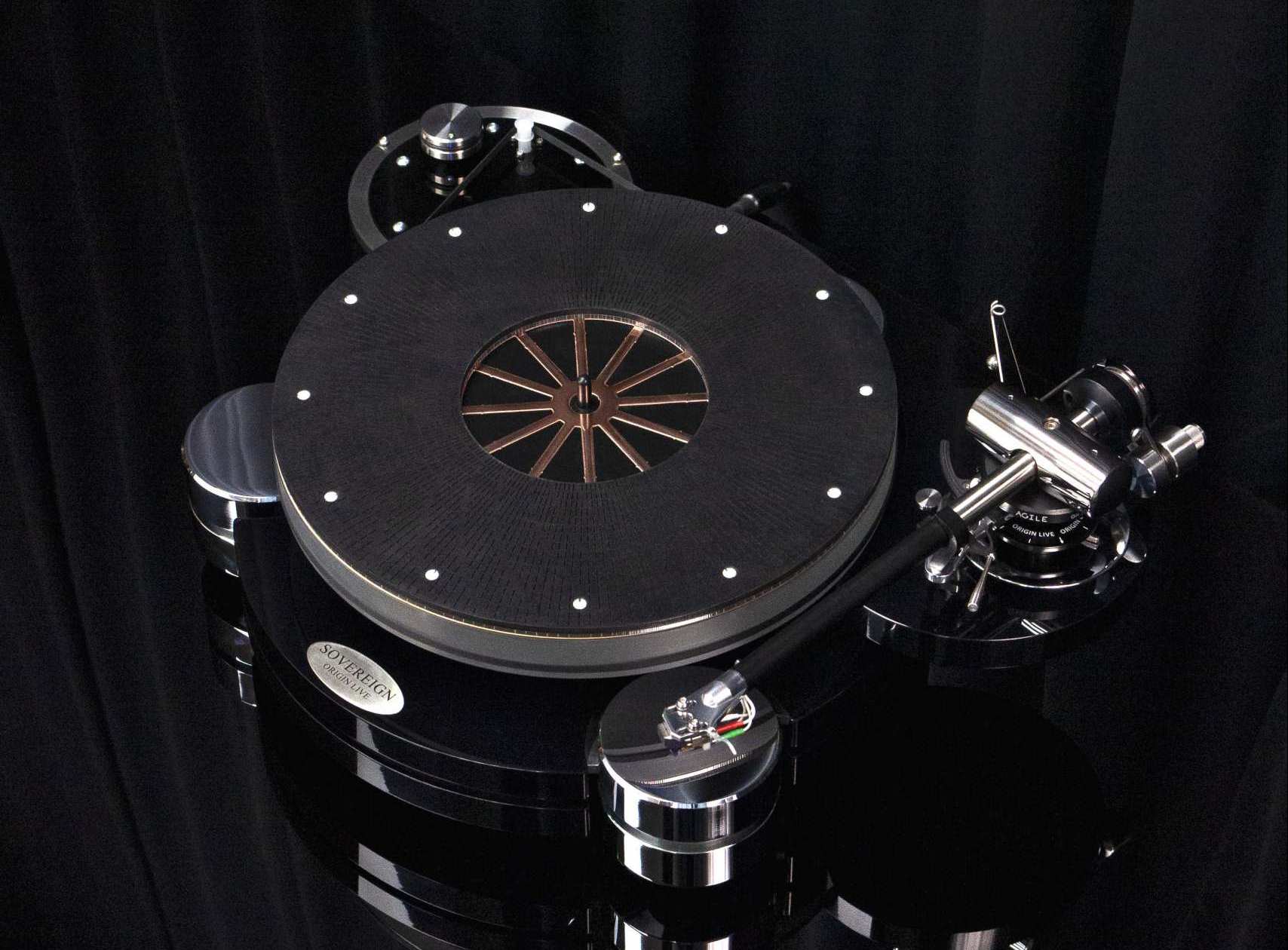
If you’re interested in getting more presence and three-dimensionality from your vinyl, Origin Live has an award-winning range of products offers serious performance upgrades with Tonearms, Turntables and Accessories to suit any budget.
Ready to transform your vinyl sound? Explore the full range now and take your setup to the next level.